Tag: learned helplessness
Kognitif Davranışçı Tedavi ve Kontrol Odaklı Davranışçı Tedavi: Kuramsal, sosyo-politik ve felsefi açılardan eleştirel bir karşılaştırma
Bu makale İngilizce orijinalinden yapay zeka (Deepseek) tarafından Türkçe’ye çevrilmiş ve yazar tarafından gerekli düzeltmeler yapılarak yayınlanmıştır. Özet Kognitif Davranışçı Tedavi (KDT) kırk yılı aşkın bir süredir dünya ruh sağlığı hizmetlerinde “altın standart” olarak sorgulanmayan bir egemenlik sürdürmektedir. Oysa klinik sonuçları dikkatli olarak incelendiğinde, KDT’nin ciddi anlamda sorunları olduğu anlaşılabilir. Bunlar arasında uzun vadede yüksek… Read More ›
Cognitive Behavior Therapy and Control‑Focused Behavioral Treatment: A critical comparison of their theoretical, socio‑political, and philosophical implications
Makalenin Türkçe versiyonu Abstract For over four decades, Cognitive Behavioral Therapy (CBT) has maintained an uncontested hegemony within global mental health care, positioned by clinical guidelines as the undisputed “gold standard.” However, a rigorous deconstruction of clinical outcomes data reveals substantial limitations: high long‑term relapse rates, a failure to outperform stripped‑down behavioral treatments in dismantling studies,… Read More ›
New book
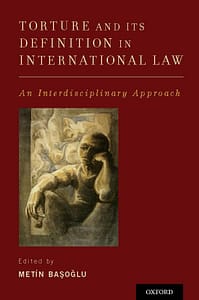
TORTURE AND ITS DEFINITION IN INTERNATIONAL LAW: AN INTERDISCIPLINARY APPROACH Edited by METİN BAŞOĞLU Oxford University Press New York, 2017 This book presents an interdisciplinary approach to definition of torture by a group of prominent scholars of behavioral sciences, international law, human rights, and public health with internationally recognized expertise and authority in their field…. Read More ›
Definition of torture in United States law: Does it provide legal cover for “enhanced interrogation techniques”?
Abstract The overly restrictive US definition of torture set forth by the “torture memos” in the early aftermath of 9/11 has been widely criticized for excluding “enhanced interrogation techniques” (EITs) and thereby creating loopholes for impunity. In the light of the US Senate Intelligence Committee Report on CIA’s detention and interrogation program confirming the use… Read More ›
Do drone strikes increase risk of revenge attacks? – A behavioral science perspective
Summary Currently much debate centers on the issue of whether drone strikes radicalize some people and increase the risk of retaliatory attacks. This article addresses this issue by presenting some research data demonstrating that war violence with similar contextual characteristics as drone warfare have certain cognitive and emotional effects (e.g. sense of injustice, anger, outrage,… Read More ›
Drone strikes or mass torture? – A learning theory analysis
SUMMARY Much of the current debate about the morality and legality of drone warfare focuses on the number of civilian casualties with little attention to its mental health, socio-economic, cultural, and political consequences. A recent study in Pakistan by the Stanford Law School and New York University (NYU) School of Law suggests that such outcomes… Read More ›